
Social Media
How do I know when online life is affecting my child’s mental health?
Children and teens · 5 minute guide · Reviewed July 2026
What to know
The essentials
- Online experiences can amplify existing stress as well as create new stress.
- A child may need support even when the technology is not the sole cause.
- Statements about self-harm, suicide, or being unable to stay safe require immediate attention.
What to notice
Look for patterns, not one imperfect moment.
- 01Persistent sadness, anxiety, irritability, or shame
- 02Withdrawal from relationships or formerly valued activities
- 03Major changes in sleep, eating, school attendance, or performance
- 04Self-harm content, hopeless statements, or talk of suicide
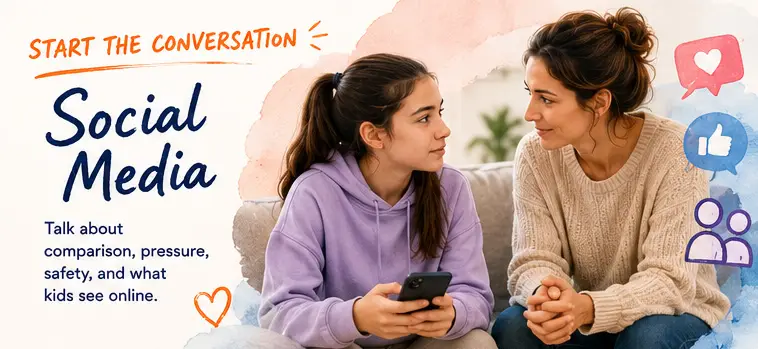
The useful question is not whether every online experience is good or bad. It is what this experience is doing in this child’s life.
What to do next
Begin with one manageable step.
- 1
Describe what you have noticed without starting with blame or a diagnosis.
- 2
Ask directly about safety when you are worried about self-harm or suicide.
- 3
Contact the child’s pediatrician or mental-health professional for persistent concerns.
What to say
Start curious. Stay calm.
“I’ve noticed you seem different after being online. What has it felt like lately?”
“You will not lose my support by telling me something hard.”
“Are you thinking about hurting yourself or wishing you were not alive?”
The full picture
More context when you need it.
Parents do not need to prove that a particular platform caused the change before seeking help. Focus first on the child’s functioning and safety, then investigate contributing patterns together.
In the United States, call or text 988 for confidential crisis support. Call emergency services at 911 when there is immediate danger or the child cannot remain safe.
Sources and review
Where this guidance comes from
This guide was reviewed in July 2026. Links open the current source so families can see the full guidance.