
Cyberbullying
What should I do if my child is being targeted online?
School age through teens · 4 minute guide · Reviewed July 2026
What to know
The essentials
- Do not respond to or forward abusive messages.
- Save dates, descriptions, screenshots, emails, and texts before blocking or reporting.
- Threats, stalking, sexual exploitation, or immediate danger require faster escalation.
What to notice
Look for patterns, not one imperfect moment.
- 01Avoiding school, friends, activities, or a particular device
- 02Sudden anxiety, shame, secrecy, or physical complaints
- 03Account deletion, unexplained social conflict, or fear of notifications
- 04Statements about hopelessness, self-harm, or not wanting to be here
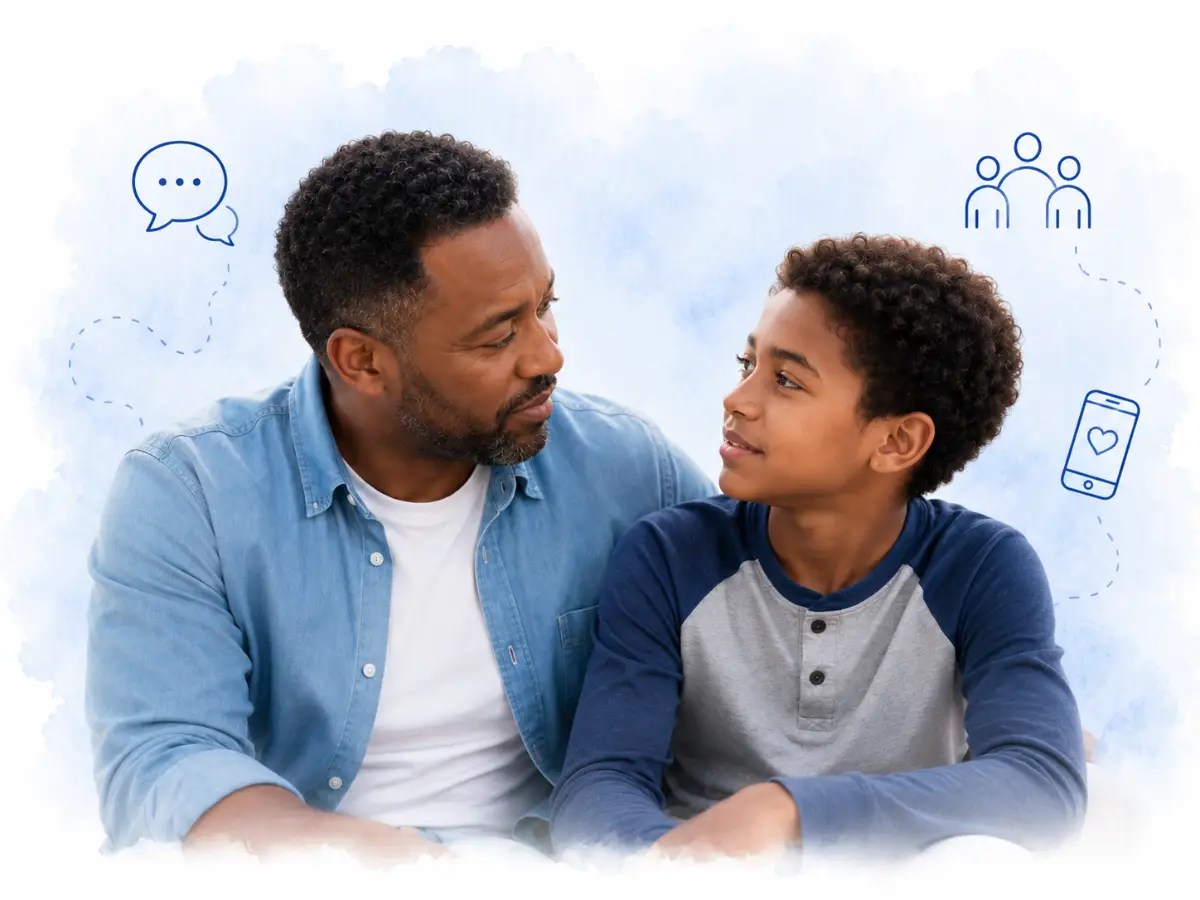
A calm first response tells a child that disclosure leads to support—not shame, blame, or immediate punishment.
What to do next
Begin with one manageable step.
- 1
Say clearly that the child is not in trouble for telling you.
- 2
Document what happened, then block and report through the platform.
- 3
Contact the school when peers or the school environment are involved.
What to say
Start curious. Stay calm.
“Thank you for telling me. You are not in trouble, and we will handle this together.”
“What are you most worried will happen next?”
“Who else needs to know so you feel safe tomorrow?”
The full picture
More context when you need it.
Official guidance recommends documenting and reporting cyberbullying. Avoid demanding that a child confront the person or publicly defend themselves while emotions are high.
If the situation includes explicit images, sexual threats, extortion, an adult contacting a minor, credible threats, or immediate danger, use the Help Now pathway.
Sources and review
Where this guidance comes from
This guide was reviewed in July 2026. Links open the current source so families can see the full guidance.