
Cyberbullying
What if my child received a sexual request, threat, or unsafe contact?
Children and teens · 4 minute urgent guide · Reviewed July 2026
What to know
The essentials
- Sextortion is a crime and can begin in any app, game, or messaging service.
- Threats often escalate when a young person pays or continues communicating.
- Never download or forward an explicit image of a minor to collect evidence.
What to notice
Look for patterns, not one imperfect moment.
- 01A new online contact quickly seeking secrecy or moving platforms
- 02Requests for sexual images, money, gift cards, or cryptocurrency
- 03Threats to share images with friends, school, or family
- 04Panic, shame, withdrawal, or statements about self-harm
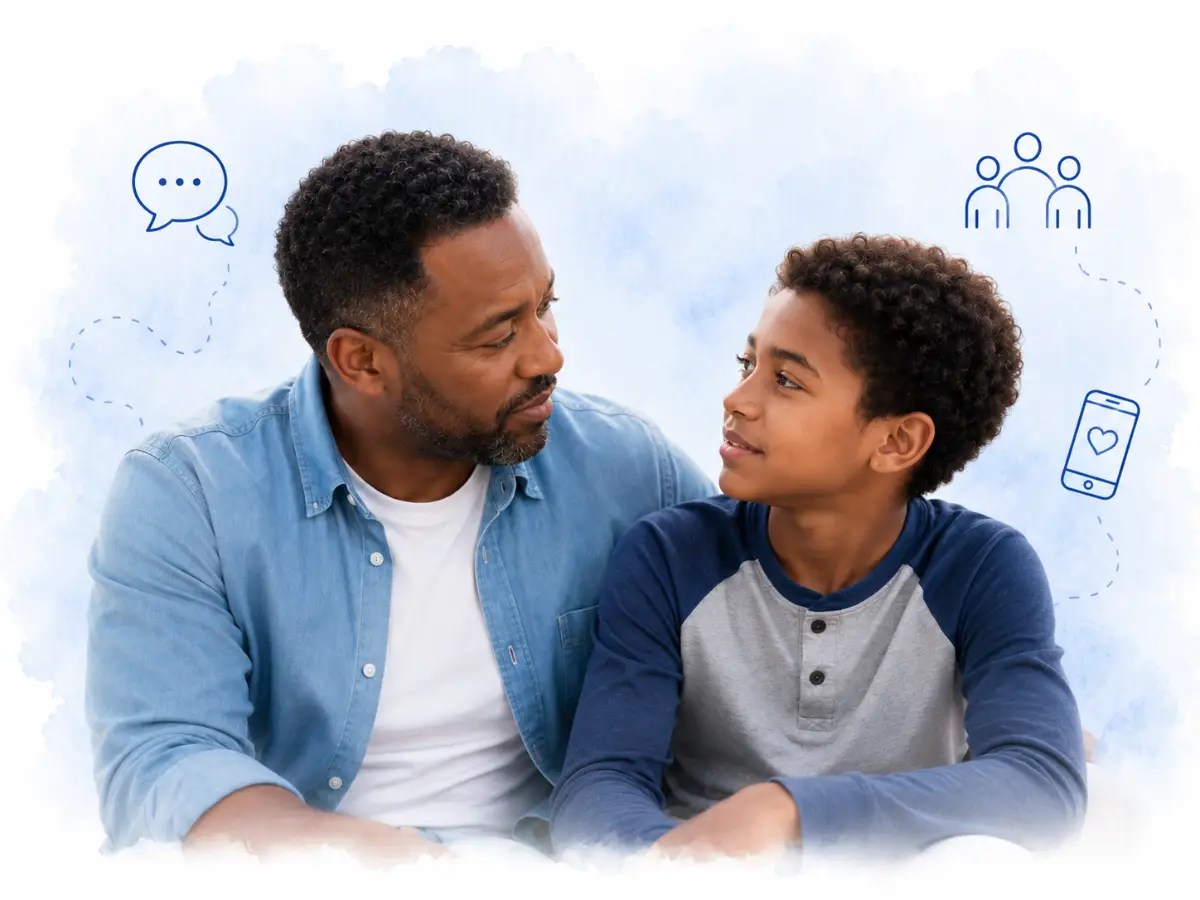
A calm first response tells a child that disclosure leads to support—not shame, blame, or immediate punishment.
What to do next
Begin with one manageable step.
- 1
Reassure the child that they are not alone and are not in trouble.
- 2
Stop contact, preserve non-explicit account and threat information, and do not pay.
- 3
Report to the platform, NCMEC CyberTipline, and law enforcement as appropriate.
What to say
Start curious. Stay calm.
“I’m glad you told me. This person is responsible for what they did—not you.”
“We will not handle this alone, and we do not have to decide everything this minute.”
“Are you feeling like you might hurt yourself or that you cannot stay safe?”
The full picture
More context when you need it.
NCMEC’s Take It Down can help stop or remove participating-platform sharing of intimate images taken when a person was under 18. The image remains on the user’s device while a digital fingerprint is created.
If the child may harm themselves, call or text 988 in the United States and stay with them. Call emergency services at 911 when there is immediate danger.
Sources and review
Where this guidance comes from
This guide was reviewed in July 2026. Links open the current source so families can see the full guidance.