
Gaming
How can I manage gaming without making every day a battle?
School age through teens · 5 minute guide · Reviewed July 2026
What to know
The essentials
- Many games combine play with social contact, purchases, rewards, and pressure to continue.
- Stopping at a natural break is easier than stopping in the middle of a match.
- Voice and text chat can expose children to strangers, harassment, scams, or adult content.
What to notice
Look for patterns, not one imperfect moment.
- 01Sleep, school, hygiene, movement, or relationships being displaced
- 02Hidden purchases or pressure to spend
- 03Chat with unknown adults or requests to move to another platform
- 04Extreme distress, deception, or repeated inability to stop
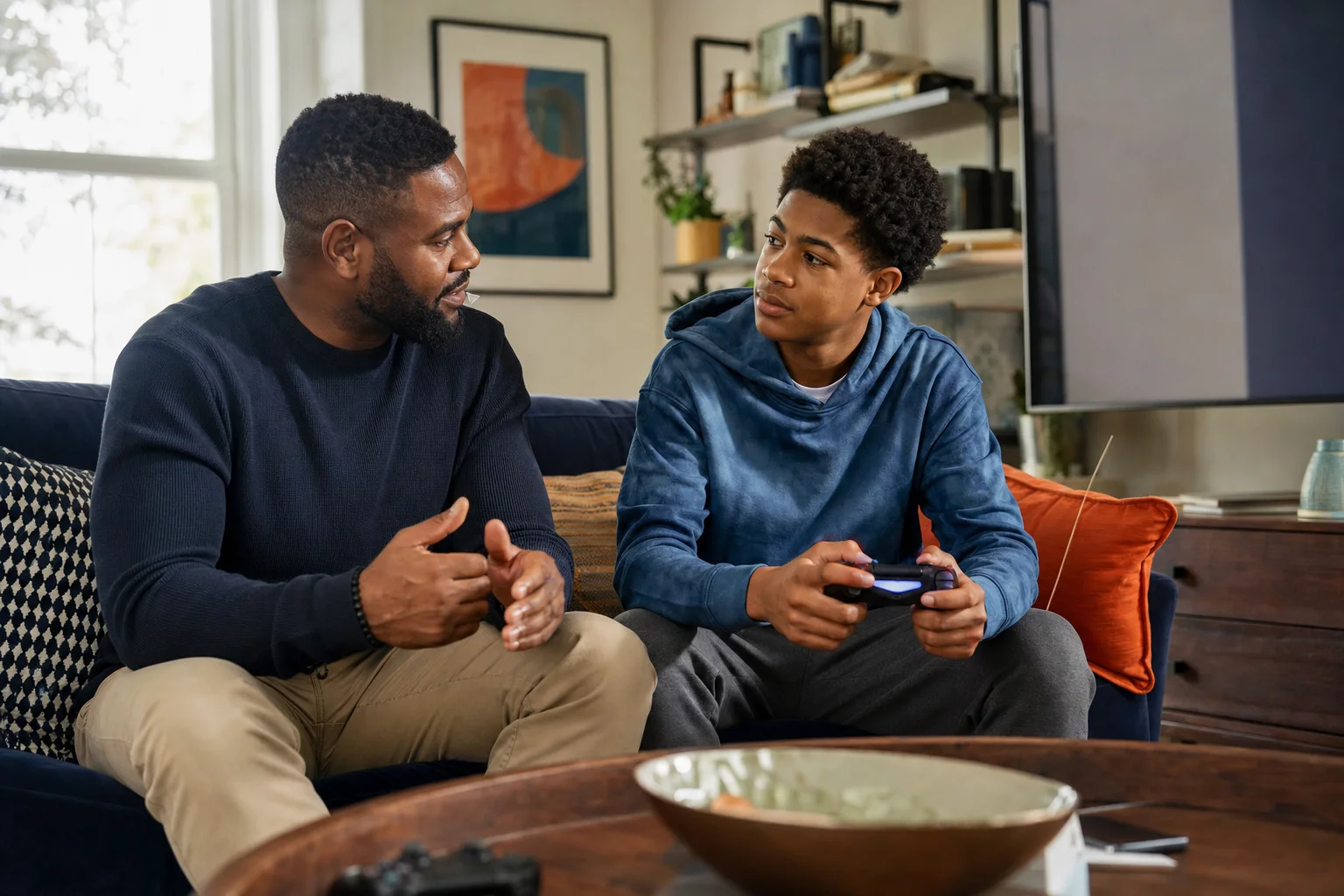
Understanding the game’s social rules, stopping points, and rewards makes family limits more realistic and easier to explain.
What to do next
Begin with one manageable step.
- 1
Play or watch long enough to understand matches, saving, chat, and purchases.
- 2
Set start and stop expectations before play begins.
- 3
Review contacts, privacy, spending, and reporting tools for each game.
What to say
Start curious. Stay calm.
“What makes this game fun enough that it is hard to leave?”
“Who can contact you here, and what would feel suspicious?”
“What is a fair way to finish a match without losing the whole evening?”
The full picture
More context when you need it.
Roblox and other large platforms are changing environments, not single games. Families should review the current account settings and play experiences rather than assuming one platform-wide safety level.
If gaming is causing major impairment or conflict, a pediatrician or mental-health professional can help assess what else may be contributing.
Sources and review
Where this guidance comes from
This guide was reviewed in July 2026. Links open the current source so families can see the full guidance.