
Younger Kids
What does healthy media use look like under age five?
Birth through age five · 5 minute guide · Reviewed July 2026
What to know
The essentials
- Video chatting with a responsive adult is different from passive viewing.
- Co-viewing helps a young child connect what happens on screen to real life.
- Background media can interrupt play and parent-child interaction even when no one is actively watching.
What to notice
Look for patterns, not one imperfect moment.
- 01Media replacing conversation, physical play, exploration, or sleep
- 02Content that is fast, frightening, or difficult for the child to understand
- 03Screens becoming the only reliable way to manage ordinary transitions
- 04Caregivers unable to participate or observe what the child is seeing
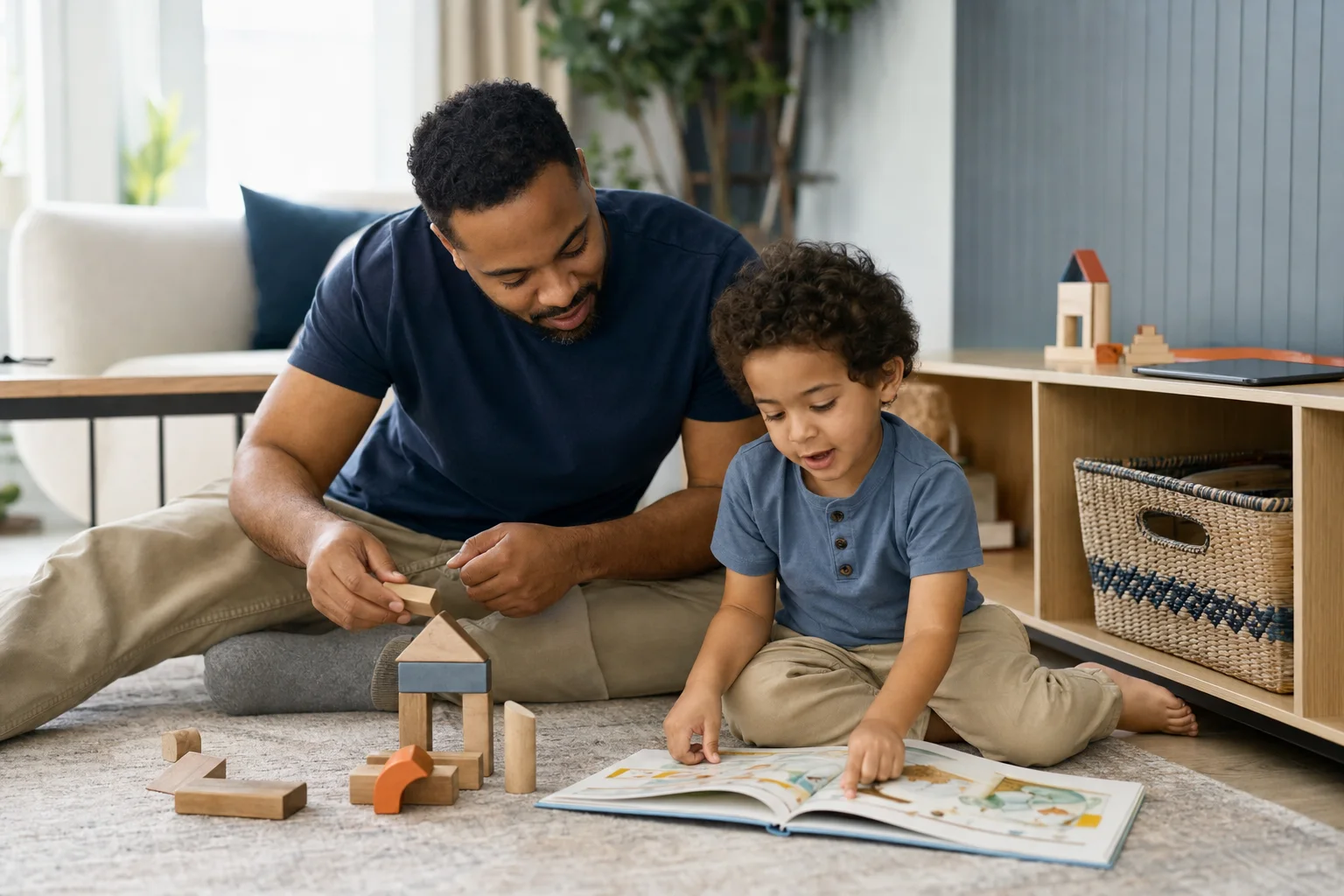
For young children, the central question is what media may replace: responsive conversation, movement, exploration, and hands-on play.
What to do next
Begin with one manageable step.
- 1
Choose a specific program rather than autoplay or an open feed.
- 2
Watch together and connect the story to people and objects in the child’s world.
- 3
Keep meals, bedrooms, and the hour before sleep screen-free when possible.
What to say
Start curious. Stay calm.
“What happened in that story?”
“Can we find something like that in our house or outside?”
“How do you think that character felt?”
The full picture
More context when you need it.
AAP guidance generally recommends avoiding media other than video chatting before about 18 months, carefully introducing high-quality co-viewed media around 18–24 months, and limiting ages two through five to about one hour per day of high-quality programming with adult involvement.
These are starting points, not substitutes for a child’s health professional or an individualized developmental plan.
Sources and review
Where this guidance comes from
This guide was reviewed in July 2026. Links open the current source so families can see the full guidance.